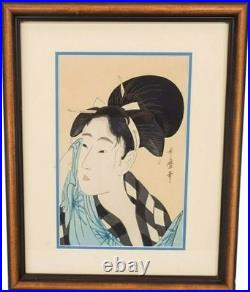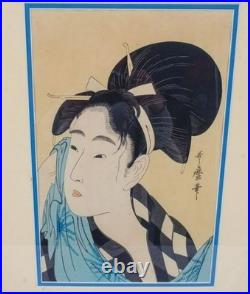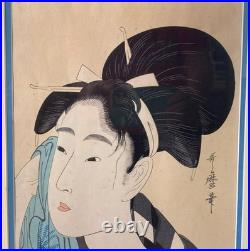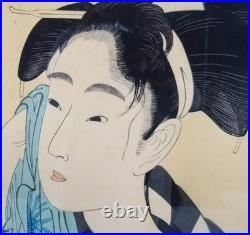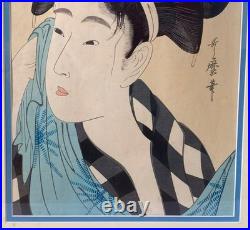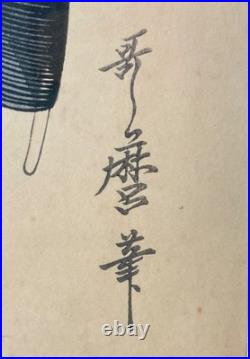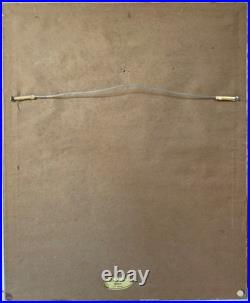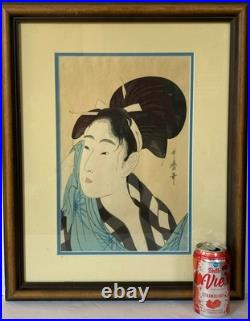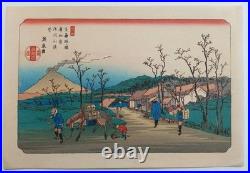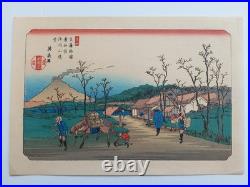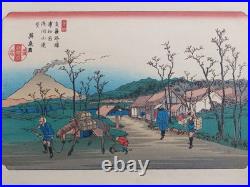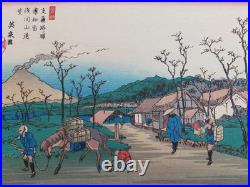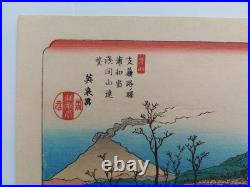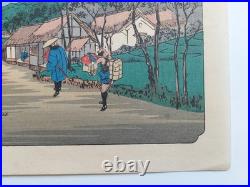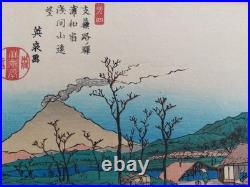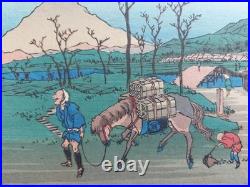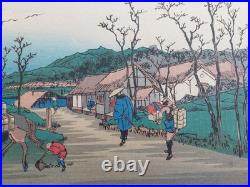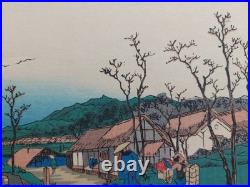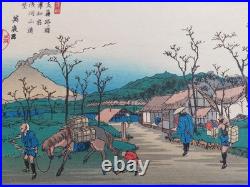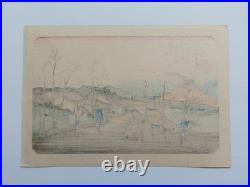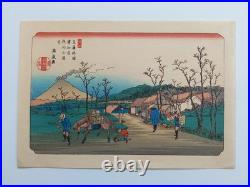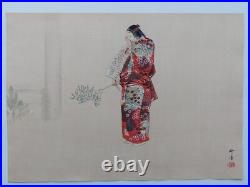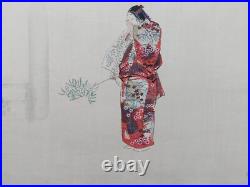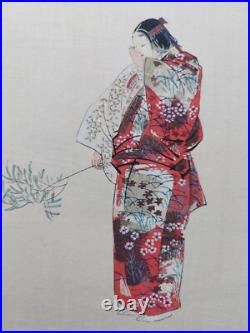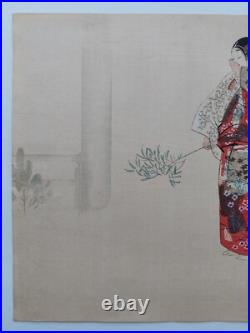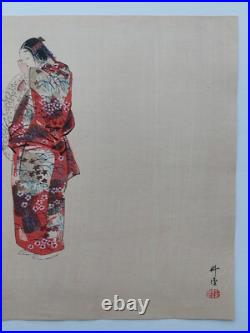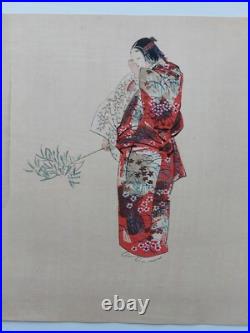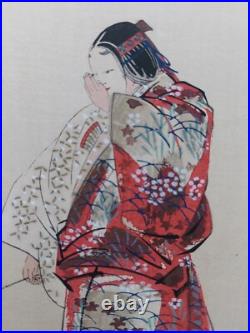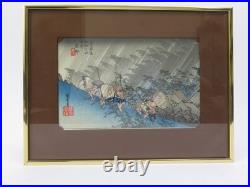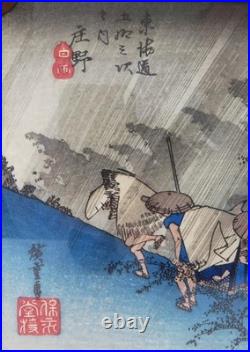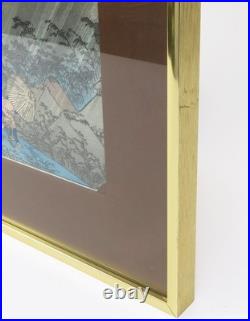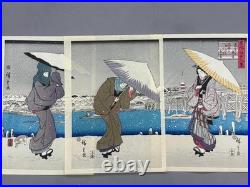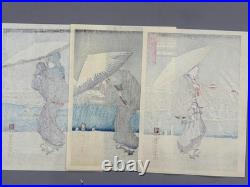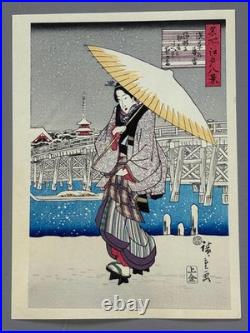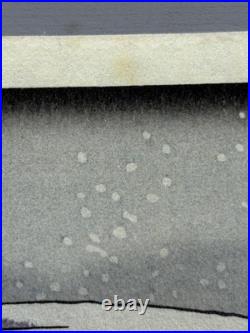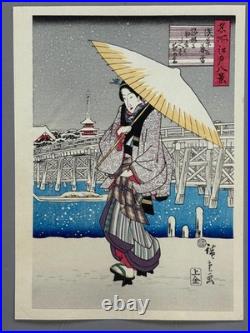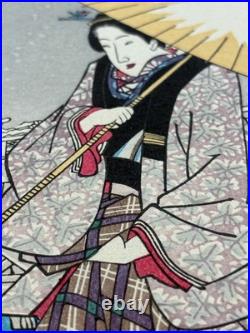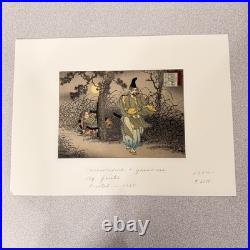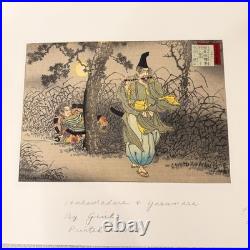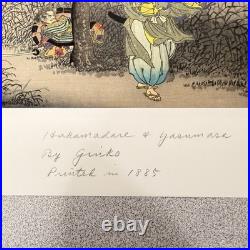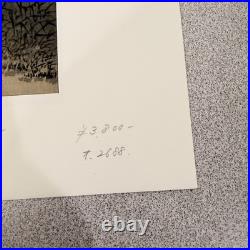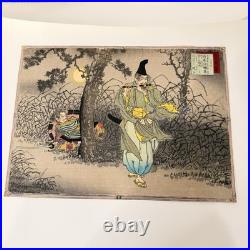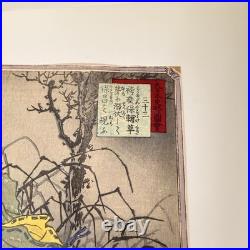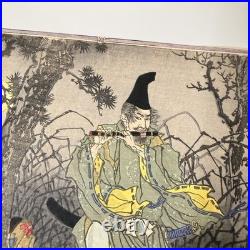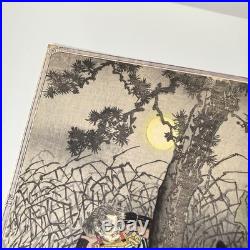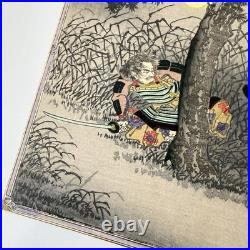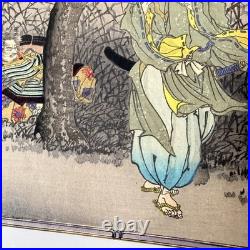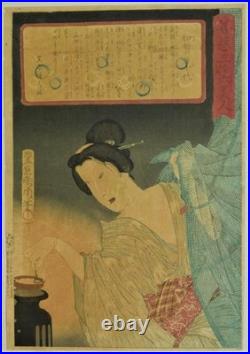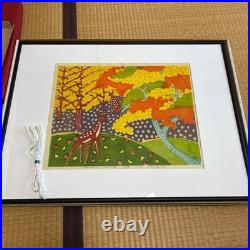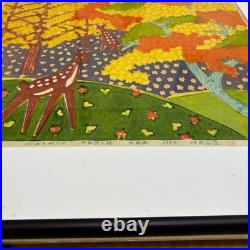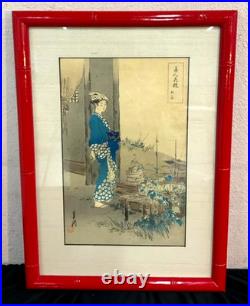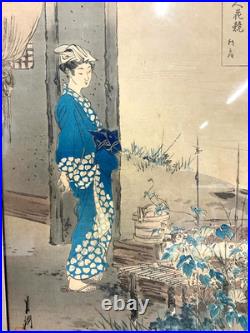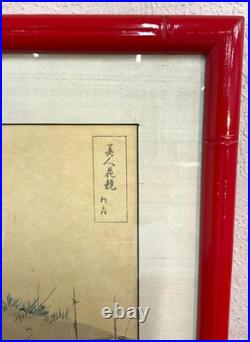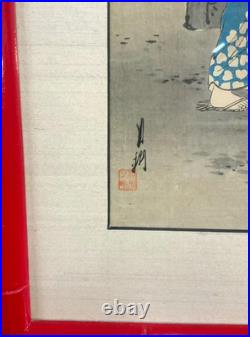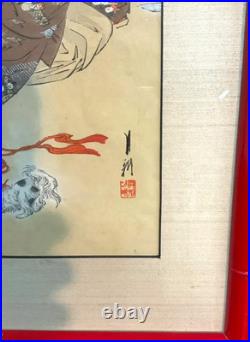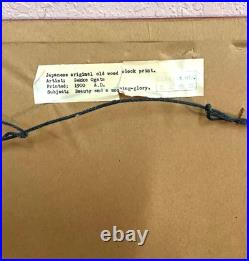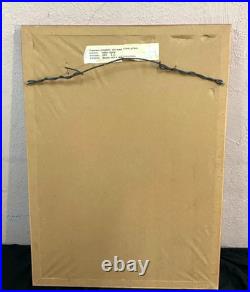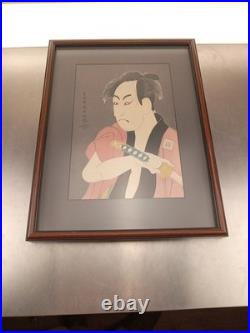
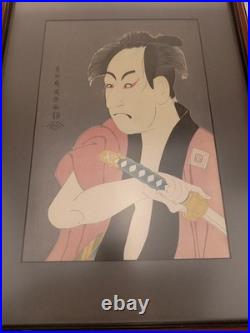
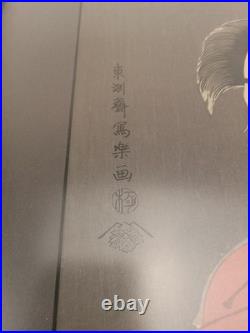
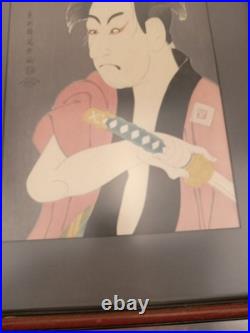

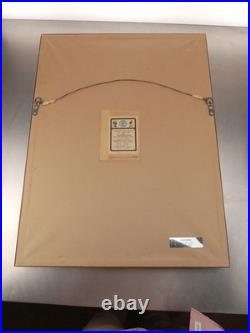
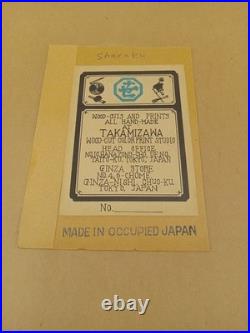

The four corners of the print are slightly glued onto a paper as you can see in the photograph. A good conservator can possibly easily mitigate the glue attachments and re-mount the print beautifully. See image of back side of print. The colored reverse is often normal for early ukiyo-e, but it is show-through, not a second printed image. Checking how Kuniyoshi-period prints were made and how pigment behaves on the paper. Strong color on the reverse is normal for an early-19th-century Kuniyoshi and is one of the usual signs of a traditional impression, not a second image deliberately printed on the back. Ukiyo-e were printed on thin handmade washi (usually kozo, paper-mulberry fiber), dampened and sized only lightly. Water-based pigments mixed with rice paste were brushed onto the blocks; the sheet was laid face-down and rubbed from the back with a baren. Because the paper is thin and absorbent, pigment soaks into the fiber matrix and often shows through on the verso as a softer, reversed version of the front image. Some colors travel more than others, so the reverse is usually uneven rather than a perfect mirror of the face. That show-through was a side effect of the process, not the intended design. The blocks were cut and printed for the front only. Both faces of a cherry block were sometimes carved to save wood, but that is about the wood, not the paper. Early impressions can show more or less penetration depending on how wet the sheet was, how heavily the pigment was loaded, and how hard the printer rubbed. Collectors and dealers treat this as a useful authenticity clue. Hand-printed Edo and early Meiji sheets commonly have uneven bleed-through; many modern offset, lithographic, or thick-paper reproductions have little or none, or a flat, uniform tint. Absence of show-through does not by itself prove a fake, and heavy bleed does not by itself prove an early Kuniyoshi-paper, key-block line, seals, and colorants still matter-but a fully colored reverse matching the front is exactly what the original method tends to produce.