
BUNGO_Province_Utagawa_Hiroshige_Japanese_Woodblock_Framed_Art_Print_18_15_VTG_01_hdm

BUNGO Province Utagawa Hiroshige Japanese Woodblock Framed Art Print 18×15 VTG

BUNGO Province Utagawa Hiroshige Japanese Woodblock Framed Art Print 18×15 VTG

BUNGO Province Utagawa Hiroshige Japanese Woodblock Framed Art Print 18×15 VTG
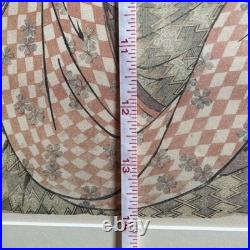
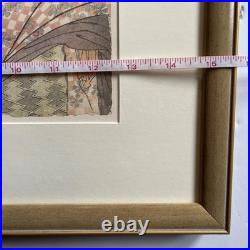
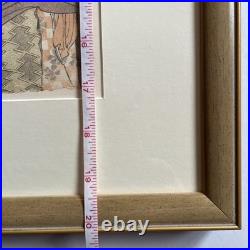
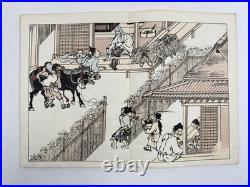
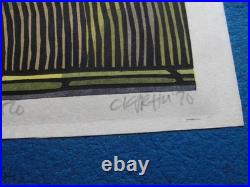
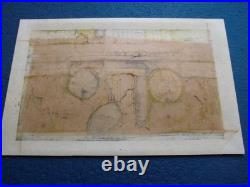
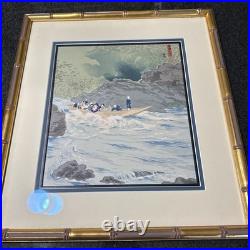
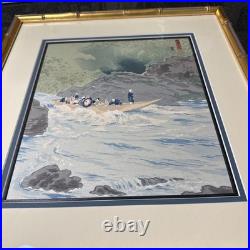
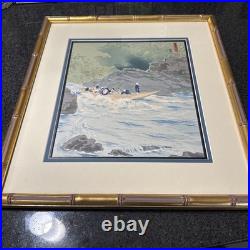
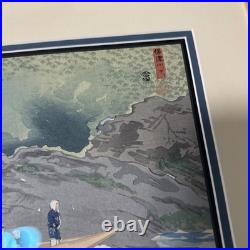
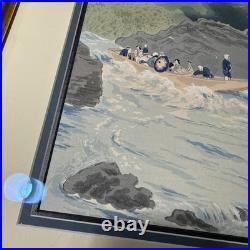
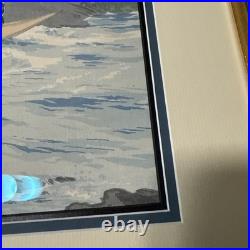
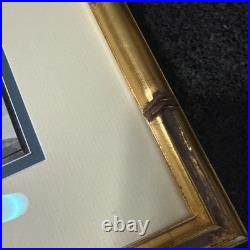
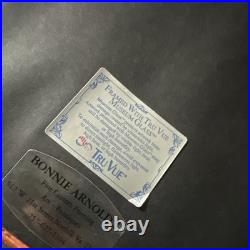
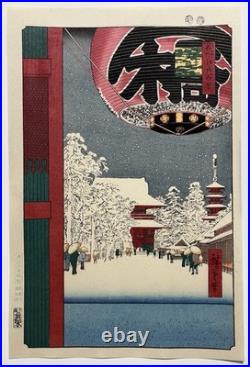
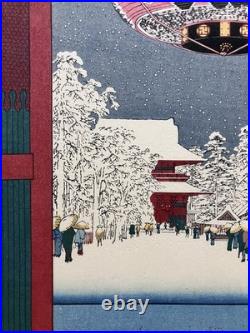
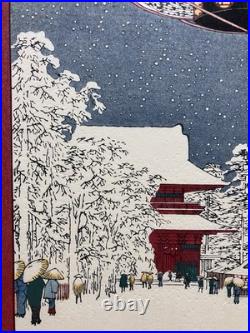
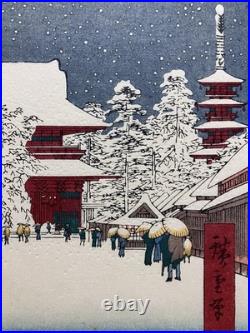
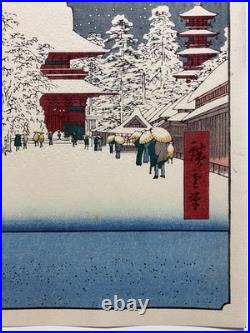
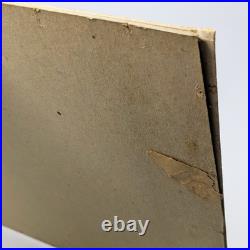
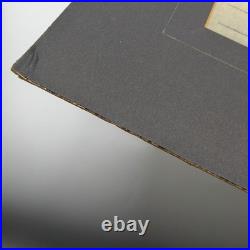
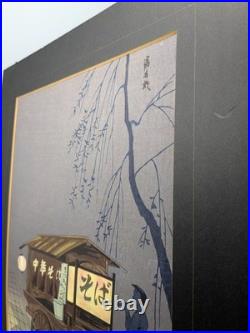
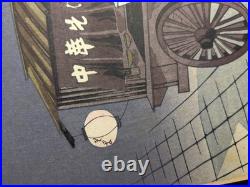
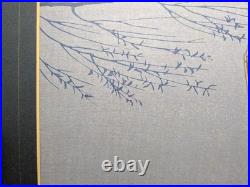
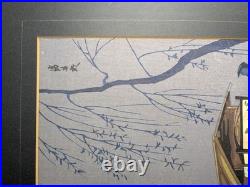
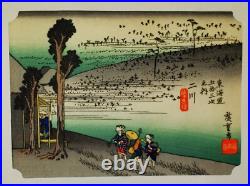
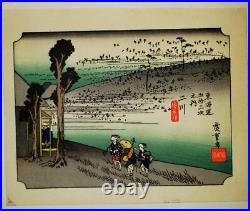
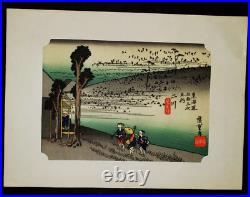
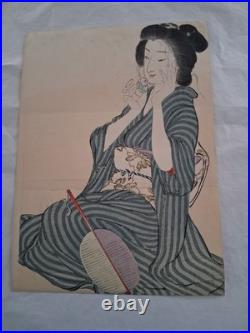
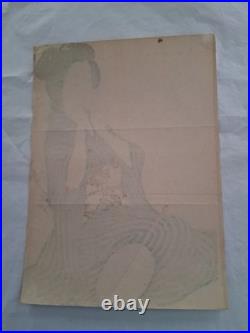
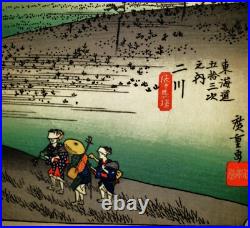
BUNGO Province Utagawa Hiroshige Japanese Woodblock Framed Art Print 18×15. PROVINCE DE BUNGO MINOSAKI (Bungo Province, Minosaki) It is a very beautiful re-print of the original. This is one in a series of 69 prints. As of this listing, I have 35 of them, all professionally framed in a brushed silver toned frame and matted in black They all came from the same Estate in Louisville, KY. All are in excellent condition and any one or all of them would add greatly to your Asian art collection. The last 5 pictures are from one of these that had a damaged back. I deconstructed it so you could see all the layers and materials involved. Key features of the print include. It depicts the landscape of Minosaki in Bungo Province, showcasing a coastal scene with mountains, boats, and a village. The print employs a vertical format, a characteristic of this series, allowing for a unique perspective and depth. Hiroshige uses bokashi shading to add depth and dimension to the image, particularly in the rendering of the mountains. This series captures famous views from each of Japan’s provinces, reflecting the beauty and diversity of the country during the Edo period. Bungo Province corresponds to present-day Oita Prefecture on the island of Kyushu, Japan. It’s believed Hiroshige drew inspiration from travel guides and possibly Hokusai’s sketches, as travel was restricted for artists during the Edo period. The series represents an evolution in Hiroshige’s landscape design, noted for its modern compositions and vertical format. Born in Edo as Tokutaro Ando, Hiroshige Utagawa grew up in a minor samurai family. His father belonged to the firefighting force assigned to Edo Castle. It is here that Hiroshige was given his first exposure to art: legend has it that a fellow fireman tutored him in the Kano school of painting, though Hiroshige’s first official teacher was Rinsai. Though Hiroshige tried to join Toyokuni Utagawa’s studio, he was turned away. In 1811, young Hiroshige entered an apprenticeship with the celebrated Toyohiro Utagawa. After only a year, he was bestowed with the artist name Hiroshige. He soon gave up his role in the fire department to focus entirely on painting and print design. During this time he studied painting, intrigued by the Shijo school. Hiroshige’s artistic genius went largely unnoticed until 1832. With the Tokugawa Shogunate relaxing centuries of age-old restrictions on travel, urban populations embraced travel art and Hiroshige Utagawa became one of the most prominent and successful ukiyo-e artists. He also produced kacho-e (bird-and-flower pictures) to enormous success. In 1858, at the age of 61, he passed away as a result of the Edo cholera epidemic. Hiroshige Utagawa’s woodblock prints continue to convey the beauty of Japan and provide insight into the everyday life of its citizens during the Edo period. The appeal of his tender, lyrical landscapes was not restricted to the Japanese audience. Hiroshige’s work had a profound influence on the Impressionists and Post-Impressionists of Europe: Toulouse-Lautrec was fascinated with Hiroshige’s daring diagonal compositions and inventive use of perspective, while Van Gogh literally copied two of Hiroshige’s prints from the famous series, 100 Famous Views of Edo in oil paint. Hiroshige (1797 – 1858). Mimasaka Province, Yamabushi Valley. Series: Famous Places in the 60-odd Provinces. Size (H x W): 14.5 x 10.75 (inches). Publisher: Koshimuraya Heisuke (Koshihei). Seals: Date and Aratame. Condition: Very good color and impression, light soiling and wear, embellished with mica.
BUNGO Province Utagawa Hiroshige Japanese Woodblock Framed Art Print 18×15 VTG
Ukiyo_e_Woodblock_Print_Kabuki_Scene_Signed_Kunisada_Utagawa_School_19th_C_01_ruw

Ukiyo-e Woodblock Print Kabuki Scene Signed Kunisada Utagawa School-19th C

Ukiyo-e Woodblock Print Kabuki Scene Signed Kunisada Utagawa School-19th C

Ukiyo-e Woodblock Print Kabuki Scene Signed Kunisada Utagawa School-19th C
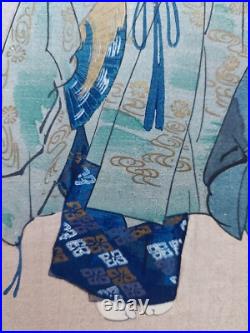
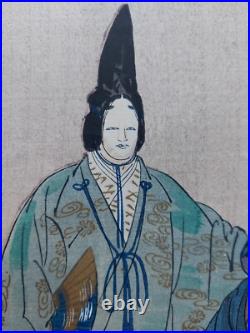
Original antique Japanese ukiyo-e woodblock print from the 19th century (Edo period). Attributed to Utagawa Kunisada (Toyokuni III), Utagawa school. The scene depicts a dynamic kabuki-related composition with multiple figures moving through a winter landscape. Artist’s marks and publisher seals are present within the design. Printed on traditional Japanese washi paper using hand-carved woodblocks. Framed size: approximately 15 × 19 inches. Presented framed, under glass. Frame and glass are included at no additional value. Condition is consistent with age, including natural toning, light foxing, and minor wear. Please review all photos carefully as they are part of the description. Attribution is offered as a scholarly opinion only. This is an original antique print, not a modern reproduction.
Ukiyo-e Woodblock Print Kabuki Scene Signed Kunisada Utagawa School-19th C
Antique_Japanese_Woodblock_Print_Triptych_Toyohara_Kunichika_Jishi_Spirit_c1893_01_xele

Antique Japanese Woodblock Print/Triptych Toyohara Kunichika Jishi Spirit c1893

Antique Japanese Woodblock Print/Triptych Toyohara Kunichika Jishi Spirit c1893

Antique Japanese Woodblock Print/Triptych Toyohara Kunichika Jishi Spirit c1893
Antique Japanese Woodblock Print/Triptych Jishi Spirit by Toyohara Kunichika c. Presented is a beautiful Japanese full oban-size original woodblock triptych print created by Toyohara Kunichika (Japanese: ; 30 June 1835 – 1 July 1900). Kunichika was a Japanese woodblock print artist. Talented as a child, at about thirteen, he became a student of Tokyo’s then-leading printmaker, Utagawa Kunisada. His deep appreciation and knowledge of kabuki drama led to his production primarily of yakusha-e, which are woodblock prints of kabuki actors and scenes from popular plays of the time.. The triptych consists of three oban-size prints with a bright red background popular in the late Meiji period. The print depicts a scene from a Kabuki dance called Shunkyo Kagami Jishi. It’s a fantasy whose story is related through the movements of the dancers. Yayoi, a young lady in waiting in the Shôgun’s palace at Edo, was chosen to perform the lion dance at the New Year celebrations, a ceremonial performance originally designed to exorcize evil spirits. Gradually, the spirit of the lion Jishi (or Shishi) entered her and took complete charge of her limbs. Jishi (or Shishi) is a lion-protector against evil spirits. On the left sheet of the triptych, you can see the main characters of the play (“Kabuki dance” was actually a play as well – a fusion of song, dance, and drama). One of the roles is played by Ichikawa Danjuro IX, a famous actor at the time. On the right sheet, you see Yayoi, with a wooden lion’s head that contained the Jishi spirit that possessed her. The Kabuki dance play “Shunkyô Kagami Jishi” was premiered in March 1893 at the Kabukiza Theater in Osaka. Kunichika actually made several prints and triptychs dedicated to this play. The title is Osaka Kabukiza Opening, Acting in the Middle Act. ” It also says “Toyo-do, Exclusive Sales Office, Dojima-naka 2-chome, ? -ku, Osaka City. AUTHOR: Toyohara Kunichika PUBLISHER: Takeemon Akiyama TITLE: Shunkyo Kagami Jishi CREATED: c. Paper METHOD OF PRINTING: Woodblock printing PRINTED: Lifetime printing circa 1890s OVERALL SIZE: Full oban size 14.25″ X 9.5″ 3 sheets. The condition is good. Great detail and colors, some minor toning and soiling of the paper. The margibs are trimmed. Some minor paper loss at the edges. No backing, no connection between the sheets – they are separated. The paper is fragile, be very careful! Get Supersized Images & Free Image Hosting. Attention Sellers – Get Templates Image Hosting, Scheduling at Auctiva. Track Page Views With.
Antique Japanese Woodblock Print/Triptych Toyohara Kunichika Jishi Spirit c1893
Antique_Meiji_Japanese_Woodblock_Print_Kabuki_Actors_with_Dice_Hats_01_vdud

Antique Meiji Japanese Woodblock Print Kabuki Actors with Dice Hats

Antique Meiji Japanese Woodblock Print Kabuki Actors with Dice Hats

Antique Meiji Japanese Woodblock Print Kabuki Actors with Dice Hats
Antique Meiji-period Japanese woodblock print, featuring three kabuki actors wearing large dice hats in a humorous and rare theatrical scene, with Mt. Fuji in the background. Beautiful colors and strong composition. Framed in an older wood frame with age wear. This striking scene shows three kabuki actors in bold poses, each humorously wearing oversized dice headpieces, a playful theme connected with festival theater, gambling references, and kabuki parody roles. The landscape includes trees, water, and a beautifully rendered Mt. Fuji, creating a classic and visually rich backdrop. The artist seal appears at the lower right; this is consistent with Meiji-era workshop artists who produced theatrical and humorous kabuki prints. The print is mounted together as a three-figure composition in one frame, likely trimmed and joined from larger original sheets, which was a common framing practice for decorative display during the early 20th century. It is housed in a solid vintage wood frame that shows expected age wear but still presents well on the wall. A wonderful decorative antique with strong colors and a rare, eye-catching kabuki subject. Frame size: approx. 23.5″ × 14.5″. Print area: multi-figure kabuki panel (trimmed & joined). Medium: woodblock print on washi. Era: Meiji period (late 1800s-early 1900s). Print shows expected antique wear: light toning, minor spots, join line visible. Trimmed edges and joined panel (common for decorative framing). Colors remain attractive. Frame is vintage with scratches, chips, and age wear. ? STORY / ARTISTIC NOTE. Kabuki prints of actors in humorous or exaggerated costumes-such as these bold dice hats-are highly collectible and often referenced popular plays, festival performances, and comedic stage roles. Meiji workshop prints like this capture the lively spirit of Japanese theater and are prized today for both their visual impact and cultural charm. Our best-effort research and attribution are for reference only.
Antique Meiji Japanese Woodblock Print Kabuki Actors with Dice Hats
Antique_Japanese_Woodblock_Print_by_Utagawa_Kuniyoshi_Kagekiyo_Framed_c_1849_01_nnie

Antique Japanese Woodblock Print by Utagawa Kuniyoshi -Kagekiyo- Framed c. 1849

Antique Japanese Woodblock Print by Utagawa Kuniyoshi -Kagekiyo- Framed c. 1849

Antique Japanese Woodblock Print by Utagawa Kuniyoshi -Kagekiyo- Framed c. 1849
Antique Japanese Woodblock Print by Utagawa Kuniyoshi Kagekiyo and Akoya c. Presented is a beautiful Japanese full oban-size woodblock print created by the renowned artist of the late Edo period, Utagawa Kuniyoshi (1798 – 1861). The print presented depicts a group of samurai listening to a woman playing. A popular Japanese string instrument. The story behind this scene is the famous love story of Kagekiyo and Akoya. This story was the subject of many Kabuki theater plays that are collectively referred to as. Kagekiyo, the hero of the story, is a very renowned warrior of the Taira clan. The Taira (Heiji) and the Minamoto (Genji) clans were rivals and were perpetually at war. Akoya is a high-ranking courtesan and the lover of General Kagekiyo who has gone into hiding after his clan, the Taira, lost to the Minamoto clan in the Genpei War during the late Heian period in Japan. In this play, Akoya, who insists she doesn’t know where Kagekiyo is hiding, is brought before Hatakeyama Shigetada and Iwanaga Saemon Sore who are charged to question and torture her. Rather than bowing to pressure from Iwanaga to use the typically heinous instruments of torture, Shigetada instead demands that Akoya perform on a series of three instruments: koto, shamisen, and kokyu. She pours such loneliness and yearning for Kagekiyo into her music that Shigetada believes she is telling the truth and releases her. We see Akoya playing koto in the middle of the painting, Shigetada at her left and evil Iwanaga Saemon Soren (the one with the red face) who insisted on physical torture, at her right. This is a beautiful sneak peek into the historical Japanese figures immortalized by Kabuki theater plays that were played for centuries. Kuniyoshi was born in Edo (present-day Tokyo) and is known for his dynamic and imaginative prints. Kuniyoshi’s works covered a wide range of subjects, including historical scenes, landscapes, kabuki actors, and mythical creatures. He was particularly skilled in depicting warriors and samurai, often creating dramatic and action-packed compositions. His style was characterized by bold lines, vibrant colors, and intricate details. He had a unique ability to capture the essence of his subjects, infusing them with energy and personality. Kuniyoshi’s prints were highly popular during his lifetime and continue to be admired for their technical skill and storytelling abilities. In addition to his artistic achievements, Kuniyoshi also played a significant role in the development of ukiyo-e as a medium. He was known for his experimentation with new techniques and his willingness to push the boundaries of traditional woodblock printing. Overall, Utagawa Kuniyoshi is considered one of the most innovative and influential ukiyo-e artists of his time, leaving a lasting impact on the genre and inspiring future generations of artists. Many museums in the world have Kuniyoshi works: British Museum Metropolitan Museum of Art in NY Museum of Fine Arts in Boston Tokyo National Museum Museum of Fine Arts in Houston Honolulu Museum of Art and many others. The print was made using the Japanese woodblock technique during the lifetime of the artist. It shows his signature “Ichiyusai Kuniyoshi ga”. Paper METHOD OF PRINTING: Woodblock printing PRINTED: Lifetime printing circa 1849 FRAME SIZE: 18.5″ X 13.5″ PRINT SIZE: 13.75″ X 9.5″ The print is framed in a vintage wooden frame. It was not examined out of frame. Condition: good impression, slight toning, some rubbing, and soiling. Minor worm-holes patching at the bottom. Get images that make Supersized seem small. Track Page Views With.
Antique Japanese Woodblock Print by Utagawa Kuniyoshi -Kagekiyo- Framed c. 1849
TOTOMI_Province_Utagawa_Hiroshige_Japanese_Woodblock_Framed_Art_Print_18_15_VTG_01_puuw

TOTOMI Province Utagawa Hiroshige Japanese Woodblock Framed Art Print 18×15 VTG

TOTOMI Province Utagawa Hiroshige Japanese Woodblock Framed Art Print 18×15 VTG

TOTOMI Province Utagawa Hiroshige Japanese Woodblock Framed Art Print 18×15 VTG
TOTOMI Province Utagawa Hiroshige Japanese Woodblock Framed Art Print 18×15. It is a very beautiful re-print of the original. This is one in a series of 69 prints. As of this listing, I have 35 of them, all professionally framed in a brushed silver toned frame and matted in black They all came from the same Estate in Louisville, KY. All are in excellent condition and any one or all of them would add greatly to your Asian art collection. The last 4 pictures are from one of these that had a damaged back. I deconstructed it so you could see all the layers and materials involved. The image is a Ukiyo-e print titled “Totomi Province: The Narrow Inlet of Inasa near Kanzan Temple on Hamana Lake at Horie” by Utagawa Hiroshige, part of the series “Famous Views of the Sixty-odd Provinces”. Depicts the scenic Inasa inlet and Kanzan Temple on Lake Hamana in Totomi Province (present-day Shizuoka Prefecture). The series includes 69 prints representing the provinces of Japan and Edo (Tokyo). Published between 1853 and 1856. Shows a curving view of the mountain and peninsula near the Inasa-Horie inlet. The text on the print reads “Famous Places in the Sixty-odd Provinces” and “Totomi Province: Lake Hamana, Kanzan Temple in Horie and the Inasa-Hosoe Inlet”. Born in Edo as Tokutaro Ando, Hiroshige Utagawa grew up in a minor samurai family. His father belonged to the firefighting force assigned to Edo Castle. It is here that Hiroshige was given his first exposure to art: legend has it that a fellow fireman tutored him in the Kano school of painting, though Hiroshige’s first official teacher was Rinsai. Though Hiroshige tried to join Toyokuni Utagawa’s studio, he was turned away. In 1811, young Hiroshige entered an apprenticeship with the celebrated Toyohiro Utagawa. After only a year, he was bestowed with the artist name Hiroshige. He soon gave up his role in the fire department to focus entirely on painting and print design. During this time he studied painting, intrigued by the Shijo school. Hiroshige’s artistic genius went largely unnoticed until 1832. With the Tokugawa Shogunate relaxing centuries of age-old restrictions on travel, urban populations embraced travel art and Hiroshige Utagawa became one of the most prominent and successful ukiyo-e artists. He also produced kacho-e (bird-and-flower pictures) to enormous success. In 1858, at the age of 61, he passed away as a result of the Edo cholera epidemic. Hiroshige Utagawa’s woodblock prints continue to convey the beauty of Japan and provide insight into the everyday life of its citizens during the Edo period. The appeal of his tender, lyrical landscapes was not restricted to the Japanese audience. Hiroshige’s work had a profound influence on the Impressionists and Post-Impressionists of Europe: Toulouse-Lautrec was fascinated with Hiroshige’s daring diagonal compositions and inventive use of perspective, while Van Gogh literally copied two of Hiroshige’s prints from the famous series, 100 Famous Views of Edo in oil paint. Hiroshige (1797 – 1858). Mimasaka Province, Yamabushi Valley. Series: Famous Places in the 60-odd Provinces. Size (H x W): 14.5 x 10.75 (inches). Publisher: Koshimuraya Heisuke (Koshihei). Seals: Date and Aratame. Condition: Very good color and impression, light soiling and wear, embellished with mica.
TOTOMI Province Utagawa Hiroshige Japanese Woodblock Framed Art Print 18×15 VTG
Kawase_Hasui_Gekko_Ukiyo_e_Woodblock_Print_30_Works_Digital_File_10000px_01_cf

Kawase Hasui Gekko Ukiyo-e Woodblock Print 30 Works Digital File 10000px

Kawase Hasui Gekko Ukiyo-e Woodblock Print 30 Works Digital File 10000px

Kawase Hasui Gekko Ukiyo-e Woodblock Print 30 Works Digital File 10000px
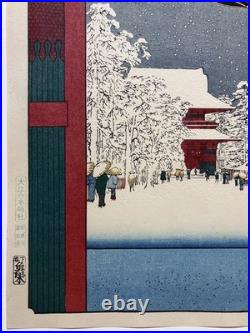
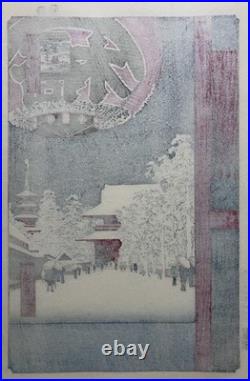
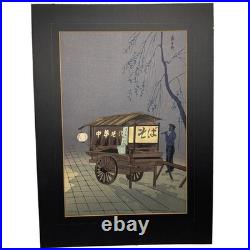
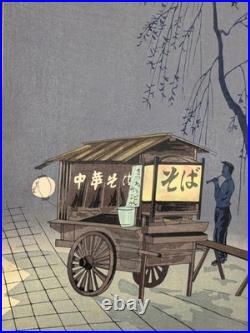
This item is pre-owned, so it may show signs of age-related wear such as scratches, scuffs, chips, cracks, dirt, stains, discoloration, and fading. Please be sure to review all photos carefully and confirm the condition before purchasing. Please note that measurements are taken by our company, so please understand that there may be some errors. If there is no special description about the accessories, only this item will be included.
Kawase Hasui Gekko Ukiyo-e Woodblock Print 30 Works Digital File 10000px
Japanese_color_woodblock_print_reprint_set_by_Yumeji_Takehisa_from_Japan_0411E3_01_pd

Japanese color woodblock print reprint set by Yumeji Takehisa from Japan 0411E3

Japanese color woodblock print reprint set by Yumeji Takehisa from Japan 0411E3

Japanese color woodblock print reprint set by Yumeji Takehisa from Japan 0411E3
Japanese Color Woodblock Print Reprint Set by Yumeji Takehisa from Japan 0411E3. This is a set of old paint woodcut reprints, slightly larger than postcards. The first print is “Snowy Day” and the second print is “Fireworks” by YUMEJI TAKEHISA. The prints are in good condition. Dimensions: 15 x 10.5 cm The item is old and accordingly has age-related wear. So please judge condition from the pictures. We have no control over taxation and cannot predict its amount or particular application. Please see “Item Condition” for product details. (: THANK YOU AND HAVE FUN SHOPPING :). _gsrx_vers_1652 GS 9.7.4 (1652).
Japanese color woodblock print reprint set by Yumeji Takehisa from Japan 0411E3